
Note · October 2026 · Bellevue, Washington
Why a solar study light
Energy poverty means living without access to electricity, and about 655 million people had none in 2024 (Tracking SDG7 2026). For students it means studying stops at sunset, around 6 PM in much of India and Sub-Saharan Africa. A $5.17 solar study light adds about six hours of reading light a night.
School ends at 3. The sun sets around 6.
Picture a student walking home after class in rural India. School let out around 3 PM, and in much of India and Sub-Saharan Africa the sun sets around 6 PM. If the house has no electricity, that leaves two or three hours of daylight for homework, and then the day is over. Studying stops at sunset.
This is not a rare situation. Some 655 million people lived without electricity in 2024, according to Tracking SDG7: The Energy Progress Report 2026.
What one light does
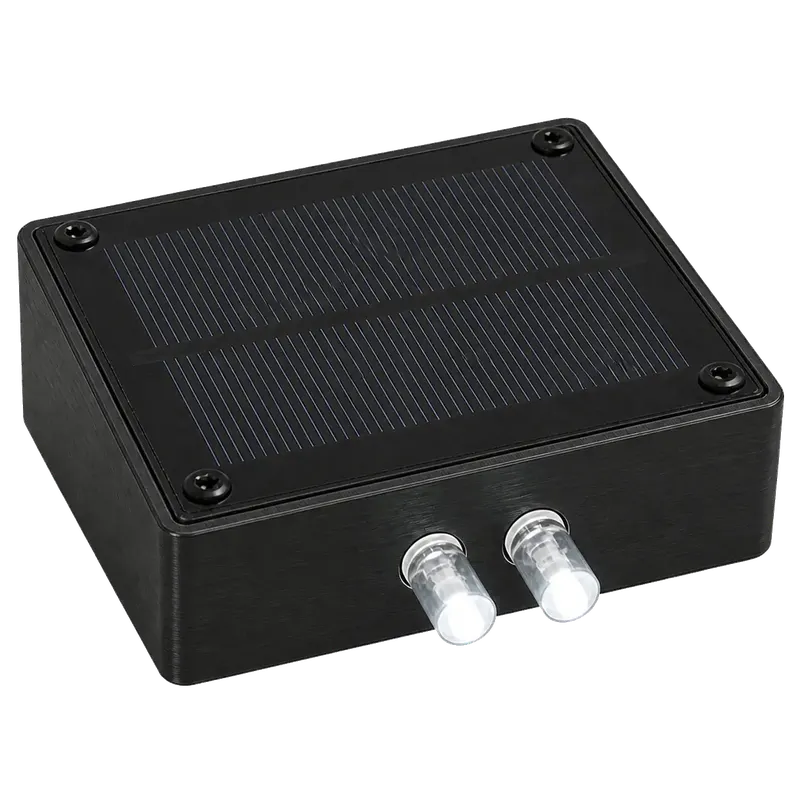
The study light is a simple machine built for that gap. A 5V solar panel charges a small battery during the day, about 7 hours of sunlight for a full charge, and two LEDs return up to about 12 hours of reading light after dark. By our estimate a student uses a light about 6 hours a night. Each is built to last 1-2 years, and replacements are available to partners.
What it costs
The parts for one light cost $5.17: a 3D-printed case ($1.10), the solar panel ($1.50), the battery ($1.65), the charge board ($0.45), the two LEDs ($0.12) and the slide switch ($0.35). Student interns build it for free. Shipping is separate.
How it reaches a student
Finished lights go to partner organizations that already work in the schools and communities. The partner knows the students and the households, chooses who receives a light, and hands it over. Flash Forward provides the lights free of charge.
That is the whole case: the studying stops at sunset, $5.17 in parts buys back about six hours a night, and the light keeps doing it for 1-2 years of school nights.
FAQ
Questions
What is energy poverty?
Living without access to electricity. About 655 million people lived without electricity in 2024, according to Tracking SDG7: The Energy Progress Report 2026.
How does a lack of electricity affect students?
When school ends around 3 PM and the sun sets around 6 PM, a student has only 2–3 hours of daylight to study. Without a light, studying stops after dark.